A theme, a reframe, three objectives
Annual planning reduces to four artifacts: a theme the company can rally behind, a reframe that grounds everyone in why the customer should care, three OKRs at the company level, and under each one a short list of initiatives that departments own. Adding more tends to produce tracking overhead rather than clearer direction. The example below is from PetDesk.
Theme of the year
“Win Vet.”
A short, memorable phrase the CEO, an AE, an engineer, and a CSM can all hold in their head and use to make a tradeoff on a Tuesday.
This year we win locations across small-animal GP: the one-doc practice, the four-doc clinic, the 200-location PE rollup. Winning the location matters more than maximizing ARR on any single one, because footprint compounds over time.
- We say yes to
- Solo DVMs, multi-doc clinics, PE-backed chains: the full range of small-animal GP locations.
- We say no to
- Specialty & ER, equine, exotic. Discount-driven ARR plays that trade footprint for price. Adjacent verticals.
Challenger reframe
“You don’t have a client problem. You have a Reach problem.”
The customer-facing lens: why the world we want to build is better than the one that exists. One declarative sentence the AE uses on a discovery call.
- From
- Clients are disengaged. We’re sending postcards and emails; they’re choosing not to come in.
- To
- Clients were never reached. Postcards and batch email reach 10–20%. The channel failed, and that’s something we can fix.
Keep OKRs at the company level; let initiatives ladder up
OKR rollouts more often stall on the cascade than on the format. When a company OKR is pushed down through departments, teams, and individuals, the result is weeks spent writing OKRs and a tracking layer few people rely on. Keeping OKRs at the company level avoids that.
Waterfall: OKRs cascaded to every level
- Company OKRs are copy-pasted and ‘cascaded’ into department, team, and individual OKRs.
- Quarterly grading meetings, color-coded confidence scores, three-page docs per person.
- Many of the goals are derivative or lagging, and the numbers lose credibility.
- Ops and HR end up owning the process. Operators stop reading it.
The shape we use: three OKRs at the company, initiatives underneath
- OKRs live at a single level: the company. The set is short enough that people can name all three.
- Each OKR has a short list of initiatives. Departments own them.
- Departments track their own work in their own language: roadmap, funnel, dashboard, runbook.
- The plan ladders up rather than being pushed down.
The plan ladders up rather than being pushed down.
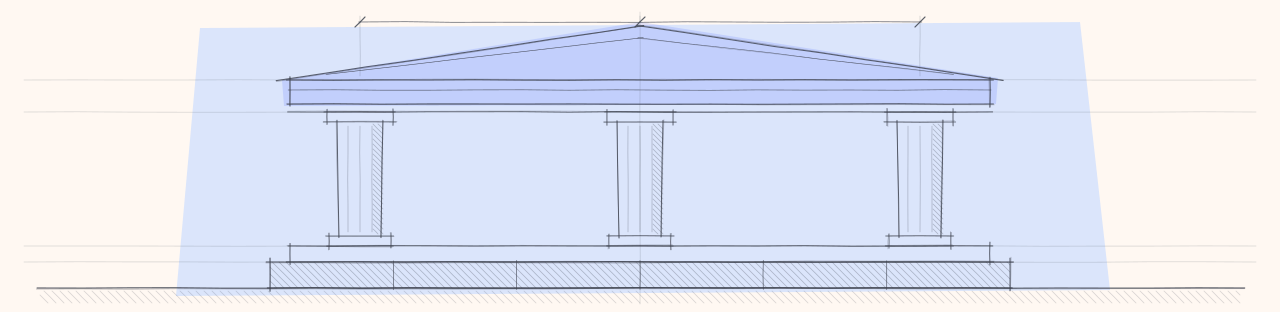
The plan as three layers
The plan is a stack. The theme and reframe sit on top: the why. The three OKRs and their initiatives sit underneath: the how. At the floor, each department’s own instrumentation: product roadmaps, sales funnels, CX playbooks.
Why: theme and reframe
Rallying cry, customer lens.
- A short phrase the company can hold onto
- A customer-facing belief, stated in one sentence
How: OKRs and initiatives
Three OKRs at the company level. 3–5 initiatives ladder into each, owned by one department, named to one person.
- 01 Accelerate revenue production: Outbound motion v2, Multi-location pricing, New-logo win rate
- 02 Build customer value: Onboarding < 30 days, Roadmap: ops console, Health-score rollout
- 03 Uplevel operations: Implementation hires, Finance close in 5, Internal tooling
What: department instrumentation
Each team uses the tools they already use to monitor what’s happening.
- Product roadmap
- Sales funnel & pipeline
- CX health scores
- Eng sprint board
- Marketing funnel
- Finance dashboard
A reusable shape, year after year
After a couple of cycles, the three company OKRs tend to settle into the same three areas: one for the top line, one for the customer, one for internal operations. The names change from year to year while the structure holds. Reuse the structure and spend the planning effort on the initiatives underneath.
OKR 01: Accelerate revenue production
The growth OKR. Key results are usually ARR, ARRv (Net New ARR per month), and ACV. Owned at the company level, with each initiative beneath it living inside GTM, marketing, or partnerships.
OKR 02: Build customer value
The retention and expansion OKR. Key results are usually GRR/NRR, time-to-value, and upsell ARR. The owners live in CX, implementation, and product: the three teams that together decide whether the customer renews.
OKR 03: Uplevel operations
The internal OKR. Key results are usually process visibility, product velocity, and gross margin. Initiatives here belong to finance, people, and engineering: the teams that make the other two OKRs cheaper to deliver next year.
What to leave out. No fourth OKR. No “culture” OKR, no “brand” OKR, no “learning” OKR. If it matters, it shows up as an initiative under one of the three. A fourth OKR usually signals a tradeoff that hasn’t been made yet.
The unit of work for the year
An initiative is a multi-quarter bet, owned by one department and named to one person: bigger than a project, smaller than a strategy. Each OKR has three to five of them, so the full company plan rarely runs more than about 15 initiatives and fits on a single page.
A good initiative passes four tests
Named to a single person, not a team. The owner can be supported by anyone, but the accountability doesn’t split.
Written as a verb on a noun (“ship the operations console”, “rebuild outbound motion”, “cut implementation to 30 days”) rather than a deliverable list.
Each initiative ladders into exactly one company OKR. If it ladders into two, it’s probably two initiatives.
An initiative is a large workstream. A sprint is a project; a three-year effort is a strategy. Initiatives run 3 to 12 months.
Departments: what they own, how they track it
Each department keeps its own instrumentation. Product runs a roadmap, Sales runs a funnel, CX runs health scores, Finance runs a close. The framework doesn’t prescribe the tool; it specifies only which company OKR the work ladders into.
| Department | Tracks in | Ladders into |
|---|---|---|
| Roadmap, sprint board, release notes. Velocity in story points or shipped features. Quality in bug rate, p95 latency, NPS deltas after release. | OKR 02 (build value) and OKR 03 (uplevel ops). Product owns the roadmap initiatives; eng owns the velocity initiatives. | |
| Pipeline funnel, win rate, ACV, ramp. Forecast by stage. Coverage ratio. AE attainment. | OKR 01 (revenue). Owns the new-logo, expansion, and pricing-model initiatives. | |
| Demand funnel, MQLs, SQLs, pipeline sourced. Brand metrics if you have them; otherwise share-of-voice anecdotes are fine. | OKR 01 (revenue). Owns demand, brand, and reframe-narrative initiatives. | |
| Health scores, GRR/NRR, time-to-value, ticket volume. Onboarding milestones by cohort. Renewal calendar. | OKR 02 (customer value). Owns onboarding, retention, and expansion initiatives. | |
| Close cadence, gross margin, headcount plan, cash runway. Hiring funnel. Comp bands. Process audits. | OKR 03 (uplevel ops). Owns the financial discipline, hiring, and process-visibility initiatives. |
Plan once a year, check four times, track every month
The plan is annual. The quarterly check-in is for reshaping initiatives that aren’t working rather than grading people. Metric review runs monthly, weekly, or daily. Without that rhythm, the plan drifts.
Lock theme, reframe, OKRs, and 12–15 initiatives
Late-year offsite. Owners named. Initiatives sized. The leadership team commits to the plan and shares it with the company in week 1.
First 90-day check. Are the initiatives holding up?
Each owner walks their initiative. Two questions: is it on track, and is it still the right initiative? Cut or reshape what isn’t working. Leave the OKRs in place.
Mid-year. Compounding starts to show
By Q3, the initiatives that are working are clear. Reallocate budget, headcount, and attention toward them. The ones that aren’t yet working get one more cycle, or get cut.
Land the year. Draft next year
Assess this year’s results; they become the inputs to next year’s plan. Start the next theme conversation in October rather than January.